
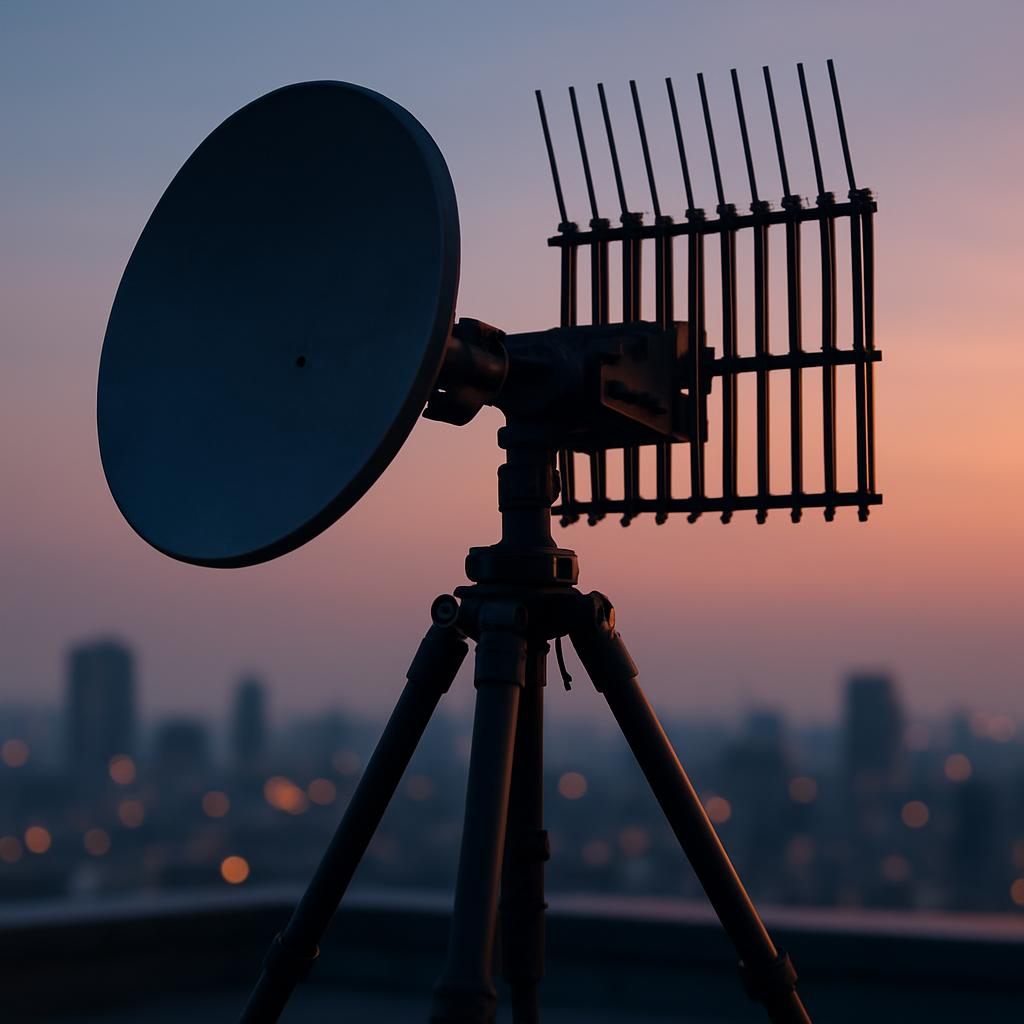
The Department of Justice announced on Wednesday, November 25, 2026 that it had issued an opinion concluding that law enforcement may deploy a broad range of technologies to detect unmanned aircraft systems, commonly called drones, consistent with federal law, according to the original release. The guidance is aimed at helping federal, state, local, tribal, and territorial authorities identify and respond to emerging drone threats while respecting Americans' privacy rights.
Key takeaways
- The Justice Department's Office of Legal Counsel issued an opinion on November 25, 2026 clarifying that law enforcement can lawfully use most drone-detection technologies.
- Acoustic, electro-optical and infrared, and radar-based detection generally do not violate the Pen-Trap Statute or Wiretap Act.
- Radiofrequency detection is generally lawful if not attached to a telephone line, and monitoring of FAA-required remote identification broadcasts does not violate the Wiretap Act because those broadcasts are publicly accessible.
- The opinion was signed by T. Elliot Gaiser, Assistant Attorney General for the Office of Legal Counsel, and is intended to guide federal, state, local, tribal and territorial authorities.
What the Opinion Covers
The opinion, issued by the Department of Justice's Office of Legal Counsel, examines how two longstanding federal privacy statutes—the Pen-Trap Statute and the Wiretap Act—apply to a range of drone-detection technologies. Those technologies include acoustic sensors, electro-optical and infrared (EO/IR) systems, radar, and radiofrequency detection systems, all of which are already used by law enforcement agencies to identify and respond to drone activity near sensitive sites.
T. Elliot Gaiser, Assistant Attorney General for the Office of Legal Counsel, who signed the opinion, said the guidance responds to a growing security challenge. "Drones present extraordinary opportunities for innovation, commerce, and public safety, but they also can be exploited by criminals, foreign adversaries, and other malicious actors," Gaiser said. "Today, DOJ provides renewed legal clarity that will help law enforcement detect and defeat drone threats to the safety and privacy of the American people."
The opinion notes that hostile or unlawful drone activity can threaten critical infrastructure, public events, correctional facilities, and other sensitive locations, and can also invade the privacy of American citizens. It analyzes federal law with the aim of ensuring law enforcement can deploy detection technologies without running afoul of statutory protections for radio and electronic communications.
Key Legal Conclusions
The opinion reaches several specific conclusions about which drone-detection methods are permissible under current federal law and under what conditions. These findings are intended to give agencies clear operational boundaries rather than requiring case-by-case legal review for every tool.
- Acoustic, electro-optical and infrared, and radar-based drone detection technologies generally do not violate either the Pen-Trap Statute or the Wiretap Act because they do not capture communications metadata or intercept protected communication contents.
- Radiofrequency detection systems used to identify drone activity generally do not violate the Pen-Trap Statute so long as they are not attached or applied to a telephone line or other communications facility.
- The use of radiofrequency systems for spectrum monitoring and the interception of FAA-required remote identification broadcasts generally does not violate the Wiretap Act because such broadcasts are designed to be publicly accessible.
- Whether interception of other drone-related communications complies with the Wiretap Act depends on the particular technology and communications involved and must be assessed on a case-by-case basis.
The last conclusion leaves room for more detailed legal scrutiny of technologies that could capture the actual content of communications between a drone and its operator, as opposed to simply detecting the drone's presence or location.
How Federal Privacy Law Applies to Surveillance Technology
The Office of Legal Counsel is the division within the Justice Department responsible for providing authoritative legal advice to the President and executive branch agencies, including interpreting how existing statutes apply to new technologies. The Pen-Trap Statute and the Wiretap Act are both part of a long-standing federal framework governing when law enforcement can monitor communications: the Pen-Trap Statute generally covers the collection of metadata about communications, such as numbers dialed or signals sent, while the Wiretap Act governs the interception of the actual content of communications.
As drones have become more widely used for commercial, recreational, and malicious purposes, law enforcement agencies have increasingly relied on detection systems to spot unauthorized aircraft near airports, prisons, large gatherings, and other sensitive sites. Because many of these detection tools pick up radio signals or other emissions that could, in theory, resemble protected communications, agencies have sought clarity on whether using them requires a warrant or other special legal authority, which is the gap this opinion is designed to close.
Implications for Law Enforcement and the Public
The opinion states that federal, state, local, tribal, and territorial officials can use many widely available detection technologies to identify and track potentially dangerous drone activity without intruding on federally protected communications. At the same time, it emphasizes that technologies capable of obtaining the actual contents of drone communications remain subject to statutory limitations and may, in some circumstances, require additional legal authority before use.
According to the release, the categories of drone-detection technologies analyzed in the opinion may often be deployed without relying on specialized counter-UAS statutory authorities, provided they are used in the manner described in the opinion and consistent with applicable constitutional and statutory requirements. The Justice Department framed the guidance as part of a broader effort to secure the homeland against evolving aerial threats while maintaining protections for the privacy rights of Americans. The opinion was published as Press Release Number 26-1414 by the department's Office of Public Affairs.
Frequently asked questions
Which agencies does this opinion apply to?
The opinion provides guidance for federal, state, local, tribal, and territorial law enforcement authorities that work to identify and respond to drone threats, according to the release.
Does the opinion allow law enforcement to listen in on all drone communications?
No. The opinion makes clear that technologies capable of capturing the actual contents of drone communications remain subject to statutory limitations and may require additional legal authority, and that compliance with the Wiretap Act for such interceptions must be assessed case by case.
Who signed the opinion and when was it issued?
The opinion was signed by T. Elliot Gaiser, Assistant Attorney General for the Office of Legal Counsel, and was announced by the Justice Department on Wednesday, November 25, 2026.