
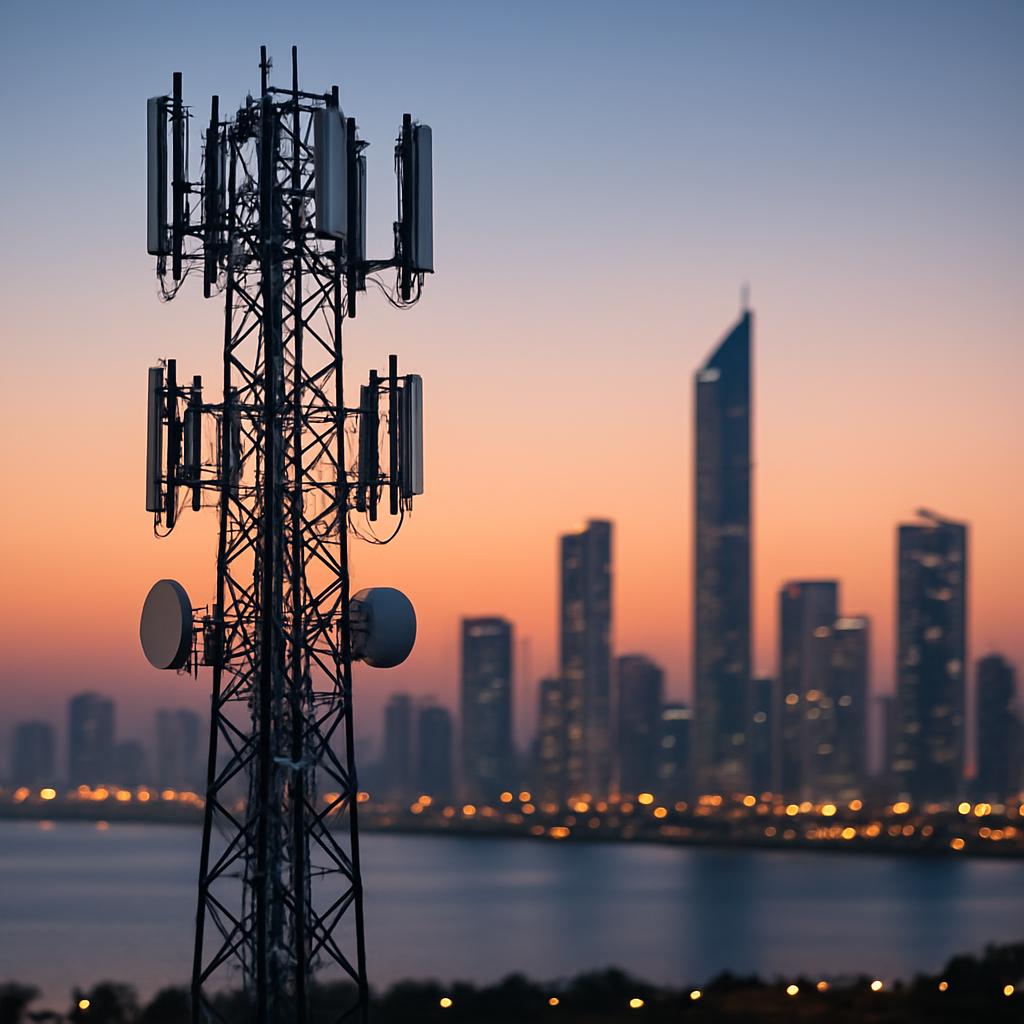
Telecom Review Group said it is accelerating the rollout of its "10Giga" gigabit broadband initiative across the Gulf Cooperation Council (GCC) region by spotlighting the role of the upper 6 GHz (U6GHz) spectrum band, according to the original release.
Key takeaways
- Telecom Review Group announced an effort to accelerate its '10Giga' gigabit connectivity initiative across Gulf Cooperation Council (GCC) countries.
- The announcement centers on the upper 6 GHz (U6GHz) radio spectrum band as a tool for expanding high-speed broadband and wireless capacity.
- The release was distributed via PR Newswire and did not include additional specifics such as dates, financial figures, or named company representatives.
- The move reflects a broader global industry push toward 10-gigabit-class connectivity standards.
What Was Announced
The release frames the effort around two connected ideas: the "10Giga GCC" push, aimed at extending gigabit-class broadband speeds across Gulf Cooperation Council markets, and the U6GHz band, a portion of radio spectrum increasingly discussed in the telecom sector as a resource for next-generation wireless capacity.
The announcement positions Telecom Review Group as drawing attention to how the upper 6 GHz band could support the region's broader connectivity ambitions, though the release did not detail specific technical milestones, partner operators, or a timeline for implementation.
No financial figures, contract details, or named spokespeople were included in the material made available.
Understanding the 10Giga Push and the U6GHz Band
Globally, the telecommunications industry has been moving toward what is often branded as "10G" — networks capable of delivering roughly 10 gigabits per second of data throughput, far beyond typical home broadband speeds today. These initiatives typically combine advances in fiber-optic infrastructure, cable networks, and next-generation wireless technology to reach that benchmark.
The upper 6 GHz band, often shortened to U6GHz, sits within the wider 6 GHz spectrum range that regulators in several countries have opened in recent years for uses including Wi-Fi 6E and Wi-Fi 7, as well as emerging 5G and future 6G services. Spectrum in this range offers wide channels that can carry large amounts of data, making it attractive for operators seeking to boost network capacity in dense urban areas.
The Gulf Cooperation Council is a regional bloc made up of Saudi Arabia, the United Arab Emirates, Qatar, Kuwait, Bahrain, and Oman. Telecom operators across these markets have been investing heavily in fixed and wireless broadband infrastructure, and spectrum policy — including decisions on bands such as U6GHz — plays a direct role in how quickly and affordably faster connectivity reaches consumers and businesses in the region.
Why It Matters for the Region's Connectivity Plans
Faster, more reliable broadband underpins a wide range of digital services, from cloud computing and streaming to the kind of fixed wireless access technology that operators increasingly rely on to deliver gigabit-level speeds without laying new fiber to every home.
For consumers and businesses in GCC countries, efforts tied to initiatives like 10Giga GCC could translate into improvements in network capacity and speed over time, though the release reviewed here stopped short of specifying which operators, cities, or consumer segments would be affected first.
Industry watchers in the telecommunications sector often track spectrum announcements closely because the amount and type of airwaves made available to operators can shape competition, pricing, and the pace at which new wireless standards are adopted.
What Remains Unclear
The release distributed by Telecom Review Group did not include direct quotes, specific dates for rollout, or details on which governments or regulators within the GCC may be involved in allocating U6GHz spectrum for the stated purpose.
It also did not specify whether the initiative involves new regulatory filings, operator commitments, or infrastructure investment figures, leaving open questions about the concrete next steps in the push toward 10-gigabit connectivity in the region.
As with other industry announcements tracked by outlets covering telecom infrastructure, additional details are typically expected to follow through operator statements, regulatory filings, or further industry coverage as initiatives like this progress.
Frequently asked questions
What is the Gulf Cooperation Council (GCC)?
The GCC is a regional political and economic bloc comprising Saudi Arabia, the United Arab Emirates, Qatar, Kuwait, Bahrain, and Oman. Telecom operators across these countries have been expanding broadband and wireless infrastructure in recent years.
What does U6GHz spectrum refer to?
U6GHz refers to the upper portion of the 6 GHz radio frequency band, which has been opened in several countries for uses such as Wi-Fi 6E, Wi-Fi 7, and emerging 5G and 6G services because it offers wide channels capable of carrying large amounts of data.
What is the '10Giga' concept in telecommunications?
It generally refers to industry efforts to build networks capable of delivering around 10 gigabits per second of data speed, combining advances in fiber, cable, and wireless technologies. The term has been used by various industry groups globally to describe next-generation broadband targets.