
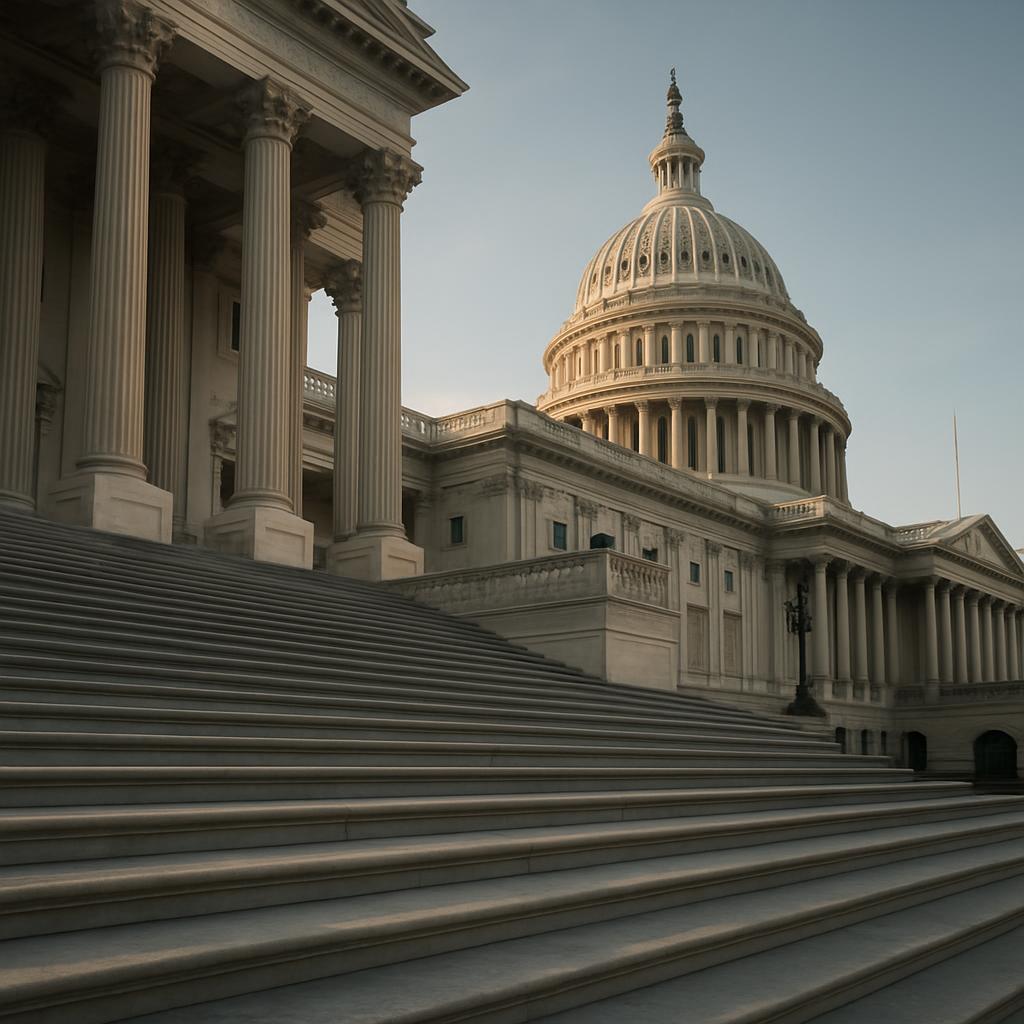
Congress is not in session in mid-October 2026. Both the House and the Senate are on recess for the midterm election campaign: the House left Washington on September 16 and the Senate on the night of September 30, and both chambers are scheduled to return on November 9, six days after the November 3 election, for a short lame-duck session that runs into December.
Key takeaways
- Congress is on its pre-election recess until November 9, 2026; the midterm election is November 3.
- The House planned only 29 full or partial weeks in session in 2026, with nearly all of August and October set aside for districts and campaigning.
- A recess is a scheduled break from floor votes, not a holiday: committee staff, constituent offices and some formal "pro forma" sessions keep going.
- The post-election lame duck has a hard deadline: government funding runs out on December 11, 2026.
- The calendar can change at short notice, so the House Majority Leader's floor schedule and the Senate's own calendar are the sources to check.
Is Congress in session this week?
For most of October 2026 the answer is no. This is the normal pattern in a midterm year: party leaders clear the calendar in the weeks before Election Day so that members of the House, all 435 of whom are on the ballot, and the third of senators facing voters can campaign at home.
The House went first. Speaker Mike Johnson sent members home on September 16, cancelling votes that had been scheduled for the next day, according to the National Low Income Housing Coalition. The Senate stayed on to finish confirmations and other business and adjourned on the night of September 30. Neither chamber is due back until the week of November 9.
That does not mean the Capitol is completely dark. The Senate typically holds brief "pro forma" sessions every few days during a long break (more on why below), and committees can still meet, hold field hearings or release reports. What stops is the regular business of the floor: debates, amendments and recorded votes on bills.
What does the 2026 congressional calendar look like?
Each chamber publishes its own calendar near the end of the previous year. The House schedule for 2026 was released in November 2025 by Majority Leader Steve Scalise and listed 29 full or partial weeks in session, with almost all of August and October blocked out ahead of the midterms. The Senate's calendar, released the next day, also gave senators almost all of October away from Washington.
| Date | What happens |
|---|---|
| January 5-6, 2026 | Senate and House return for the second session of the 119th Congress |
| Spring and summer | Alternating work weeks and recess weeks around Easter, Memorial Day and July 4 |
| August | Long summer recess; the Senate sat for the first week of August |
| September 2026 | Short return to pass a stopgap funding bill before the fiscal year ended September 30 |
| September 16 | House leaves for the pre-election recess |
| September 30 | Senate leaves for the pre-election recess |
| November 3 | Midterm elections |
| November 9 | Both chambers return for the lame-duck session |
| Week of November 26 | Thanksgiving recess |
| December 11 | Current government funding expires |
| Mid-to-late December | Session expected to wrap up before Christmas |
| January 3, 2027 | The new 120th Congress is sworn in |
The headline numbers matter less than the rhythm. In a typical year, the House works three or four weeks, then takes a "district work period"; the Senate calls its equivalent a "state work period." Holidays such as Presidents Day, Memorial Day, the Fourth of July and Thanksgiving almost always bring a full week off, and the two chambers sometimes alternate their weeks so that one is in session while the other is out.
Calendars are also only a plan. In 2025, the House took an unscheduled break of roughly 50 days during the 43-day government shutdown, while the Senate added days it had not planned to work. A crisis, a must-pass deadline or a leadership decision can add or cancel weeks with a few days' notice.
What is a congressional recess?
A recess is a scheduled break when a chamber stops holding floor sessions and votes. Most recesses last a week or two; the longest are the August break and, in election years, the October campaign period.
There are a few related terms that often get mixed up:
- Recess: a temporary break within a session. Lawmakers are expected back on a set date.
- District or state work period: the official name each chamber uses for its recess weeks, reflecting the expectation that members work at home.
- Adjournment: the formal act of ending a day's sitting or a longer period; an adjournment of more than three days needs the agreement of the other chamber.
- Sine die adjournment: the formal end of a session, after which there is no set date to return. The second session of the 119th Congress will end this way, at the latest when the new Congress begins in January 2027.
- Pro forma session: a brief meeting, often lasting only minutes, held during a break with no real business planned.
The August recess has a legal anchor: the Legislative Reorganization Act of 1970 built a summer break into the congressional calendar, and it has been a fixture ever since, although both chambers have stayed in session for parts of August in some years when deadlines were pressing.
What do lawmakers actually do during a recess?
Recess is not paid vacation in the ordinary sense, although it can include family time. For most members, district weeks are a different kind of work. Typical activities include:
- Town halls and meetings with constituents, local businesses and community groups.
- Visits to military bases, factories, farms, hospitals and schools in the district or state.
- Casework: helping individuals with problems involving federal agencies such as Social Security, veterans' benefits or passports, which constituent offices handle year-round.
- Fundraising and campaigning, which by law must be done separately from official duties and with campaign rather than taxpayer resources.
- Congressional delegation trips abroad, known as CODELs, which are often scheduled during recess weeks.
In October of an election year, campaigning dominates. House members serve two-year terms, so every one of them is running in 2026 unless they are retiring, and recess weeks are when they can be in their districts full time.
Staff in Washington keep working too. Committee staff prepare hearings and draft legislation, and leadership aides negotiate the bills that will need votes when members return. That behind-the-scenes work matters this year, because the lame-duck session will be short.
Why does the Senate hold pro forma sessions during a recess?
Pro forma sessions exist for two constitutional reasons, and they explain why the Senate often appears to be "in session" for a few minutes on days when nobody is voting.
First, Article I of the Constitution says neither chamber may adjourn for more than three days without the consent of the other. If the House and Senate do not pass a formal resolution agreeing to a long break, each holds brief sessions every three days to stay within that rule.
Second, the president can make "recess appointments," temporarily filling posts that would normally need Senate confirmation, when the Senate is in recess. In NLRB v. Noel Canning (2014), the Supreme Court said a break of fewer than ten days is presumptively too short to count. Holding pro forma sessions keeps every gap below that threshold and preserves the Senate's confirmation power, which is why both parties have used the tactic when the White House is controlled by the other side, and sometimes even when it is not.
What happens when Congress comes back after the election?
The weeks between the November election and the start of the new Congress are known as the lame-duck session, because some members voting will already have lost their seats or be retiring. Lame-duck sessions usually begin in mid-November and finish before Christmas, and 2026 follows that pattern.
This year's to-do list is long, as a Holland & Knight review of year-end deadlines sets out. When both chambers return on November 9, they will have only a few weeks of floor time, with a Thanksgiving break in the middle. The items most often cited by congressional observers include:
- Government funding for fiscal year 2027. A stopgap bill signed in early September keeps agencies running only until December 11, 2026. Congress must pass the 12 annual spending bills, another stopgap, or face a shutdown.
- The farm bill. The House passed its version; the Senate's has cleared committee, and negotiations are expected to happen after the election.
- The annual defense authorization bill (NDAA), which Congress has passed every year for more than six decades.
- Expiring programs and authorities, including health care extenders, tax provisions and other deadlines that tend to pile up at year-end.
- Nominations, which the Senate can process in the lame duck without the House.
Election results can reshape all of this. If party control of either chamber changes in January, the outgoing majority has a strong incentive to finish priorities before handing over power, while the incoming majority may prefer to wait. That tension often decides whether a lame duck passes big, long-term bills or just enough short-term fixes to reach the new year.
How can I check whether Congress is in session on a given day?
The calendar changes often enough that the most reliable answer always comes from the chambers themselves. Congress.gov, run by the Library of Congress, is the best single starting point:
- House: the Majority Leader's office publishes the weekly floor schedule and the annual calendar, and the House Clerk's website shows when the chamber is sitting and streams the floor live.
- Senate: the Senate's official website posts its schedule and the daily floor activity, and both parties' cloakrooms publish updates on floor action.
- Congress.gov: the Library of Congress site shows which days each chamber met and links to the Congressional Record for each day.
- C-SPAN: carries live coverage whenever either chamber is sitting.
A practical tip: if the Senate website shows a session of only a few minutes with no votes, it is almost certainly a pro forma session, not a return to normal business.
Where things stand in October 2026
Congress is out of Washington and expected to stay out until November 9. The House last held votes on September 16 and the Senate on September 30. Government funding is secure until December 11 under the stopgap law signed on September 2, which means there is no shutdown risk before the election, but the deadline falls in the middle of the lame-duck session. For the spending fight itself, see where the federal budget stands. The 119th Congress is due to end on January 3, 2027, when the members elected on November 3 are sworn in.
Frequently asked questions
When is Congress back in session?
Both the House and the Senate are scheduled to return on November 9, 2026, for the lame-duck session. They are expected to break for Thanksgiving week and finish the session in December, before the new Congress starts on January 3, 2027.
Do members of Congress get paid during a recess?
Yes. Members are paid an annual salary, not by the day, so pay continues during recess weeks. The base salary for most members of the House and Senate is $174,000 a year, a figure that has not changed since 2009; leaders are paid more.
Can Congress be called back early from a recess?
Yes. House and Senate leaders can reconvene their chambers before a scheduled return date, usually under authority written into the recess arrangements, and the Constitution also allows the president to call Congress into session "on extraordinary occasions." Early returns are rare and normally happen only for emergencies or urgent deadlines.
How many days a year is Congress in session?
It varies by year and by chamber. In 2026, the House planned 29 full or partial weeks in session. The Senate typically sits on more days than the House, partly because it handles nominations, and both chambers usually spend fewer days in Washington in election years than in odd-numbered years.
What is the difference between a recess and an adjournment?
A recess is a temporary break with an expected return date. An adjournment formally ends a sitting; an adjournment "sine die" ends the whole session. In everyday use the words overlap, but the formal difference matters for rules such as the three-day limit and recess appointments.
When does the next Congress start?
The 120th Congress begins on January 3, 2027, the date set by the 20th Amendment unless Congress passes a law choosing another day. Members elected on November 3, 2026, take office then.