
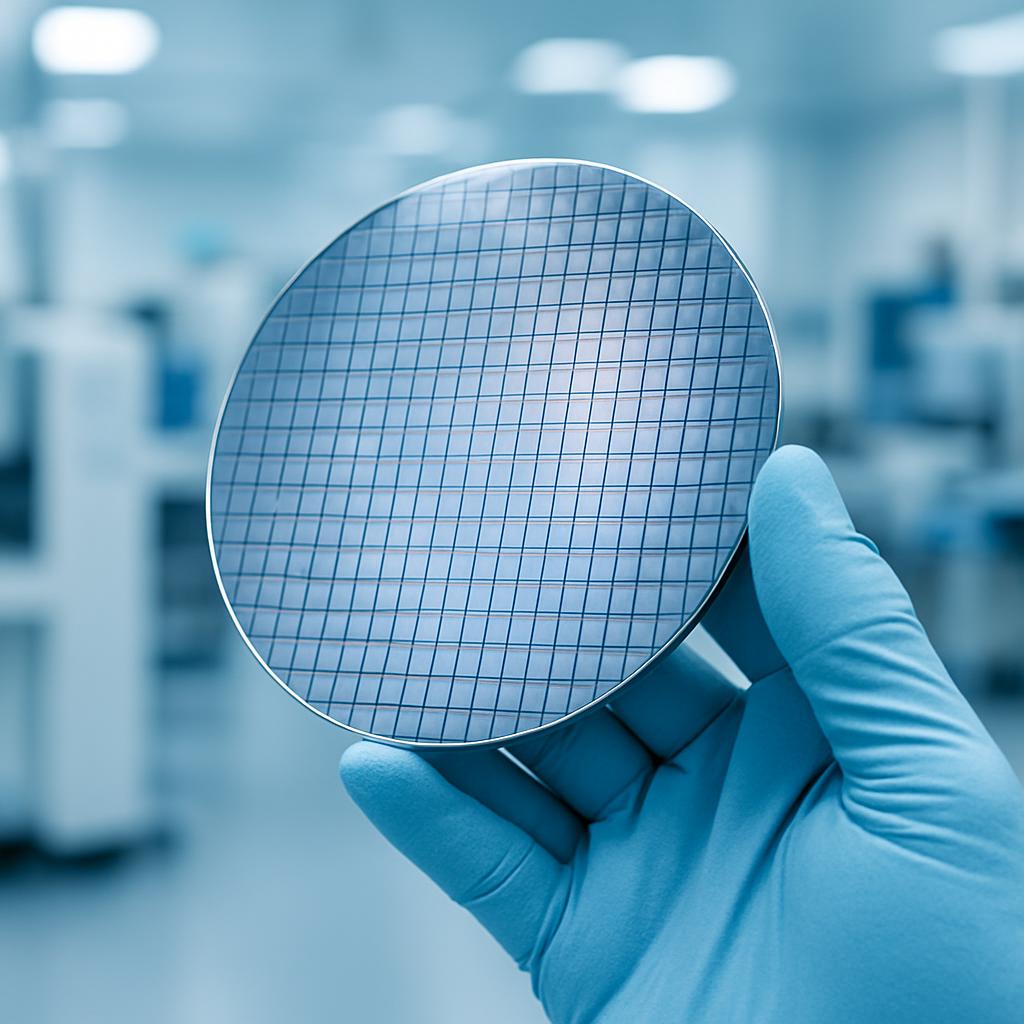
The top three semiconductor companies by revenue are Nvidia, Samsung Electronics and SK hynix, according to Gartner's ranking for 2025. The largest chip manufacturer, however, is Taiwan's TSMC, which makes chips designed by other companies, including Nvidia, Apple and AMD. Global semiconductor sales reached about $793 billion in 2025, up 21% in a year, driven by demand for AI.
Key takeaways
- Nvidia became the first chip company to pass $100 billion in annual semiconductor revenue, with about $126 billion in 2025.
- Samsung and SK hynix, both South Korean memory giants, ranked second and third; Intel has fallen to fourth.
- TSMC manufactures most of the world's most advanced chips under contract, mostly in Taiwan.
- The U.S. does make chips, and new advanced factories in Arizona are now producing, but most leading-edge manufacturing remains in Asia.
- AI chips and the high-bandwidth memory that feeds them were responsible for much of the industry's growth.
What are the top 3 semiconductor companies?
By semiconductor revenue in 2025, the top three were Nvidia, Samsung Electronics and SK hynix. Gartner's preliminary 2025 ranking lists the top ten:
| Rank | Company | Country | 2025 chip revenue | Best known for |
|---|---|---|---|---|
| 1 | Nvidia | U.S. | $125.7 billion | AI processors (GPUs) |
| 2 | Samsung Electronics | South Korea | $72.5 billion | Memory chips, phone processors |
| 3 | SK hynix | South Korea | $60.6 billion | Memory, including AI memory (HBM) |
| 4 | Intel | U.S. | $47.9 billion | PC and server processors, manufacturing |
| 5 | Micron Technology | U.S. | $41.5 billion | Memory chips |
| 6 | Qualcomm | U.S. | $37.0 billion | Smartphone processors and modems |
| 7 | Broadcom | U.S. | $34.3 billion | Networking and custom AI chips |
| 8 | AMD | U.S. | $32.5 billion | PC, server and AI processors |
| 9 | Apple | U.S. | $24.6 billion | Chips for its own iPhones and Macs |
| 10 | MediaTek | Taiwan | $18.5 billion | Smartphone and device processors |
Nvidia's rise is the story of the decade in chips. Its graphics processors turned out to be ideal for training and running AI models, and its 2025 revenue grew about 64%, accounting for more than a third of the whole industry's growth. Intel, the long-time leader, has seen its share fall to about 6%, roughly half of what it held in 2021.
This ranking covers companies that sell chips. It leaves out TSMC, because TSMC does not sell its own branded chips; it manufactures them for others.
Who is the largest manufacturer of semiconductor chips?
Taiwan Semiconductor Manufacturing Company (TSMC) is the world's largest chip manufacturer and the dominant maker of the most advanced chips. It is a "foundry": companies such as Nvidia, Apple, AMD, Qualcomm and Broadcom design chips, and TSMC builds them in its factories, called fabs.
The industry is split into a few kinds of companies, which is why "biggest chip company" can have several answers:
- Designers (fabless companies): create chip designs but outsource manufacturing. Examples: Nvidia, AMD, Qualcomm, Broadcom, Apple.
- Foundries: manufacture chips designed by others. Examples: TSMC, Samsung's foundry business, GlobalFoundries.
- Integrated manufacturers: design and make their own chips. Examples: Intel, Samsung, SK hynix, Micron, Texas Instruments.
- Equipment makers: build the machines used to make chips. The Dutch firm ASML is the only supplier of the extreme ultraviolet (EUV) lithography machines needed for the most advanced chips.
Measured by stock market value, the order shifts again: Nvidia is the world's most valuable chipmaker, with TSMC and Broadcom close behind in 2026.
Does the United States make semiconductor chips?
Yes. The U.S. has dozens of chip factories, run by companies including Intel, Texas Instruments, Micron, GlobalFoundries and Samsung. But for decades most advanced manufacturing moved to Taiwan and South Korea, and the U.S. share of global production fell sharply.
The CHIPS and Science Act of 2022 was designed to reverse that. It provided $39 billion in manufacturing incentives, with fiscal 2026 the final year of that funding, according to the Congressional Research Service. Progress by 2026:
- TSMC Arizona: its first Phoenix fab is producing advanced 4-nanometer chips for customers including Apple and Nvidia, with further fabs under construction.
- Intel: began high-volume production of its most advanced process, Intel 18A, at its Arizona and Oregon fabs in late 2025, according to its annual report. Its large Ohio project has been pushed back by several years.
- Samsung and Micron: are building or expanding plants in Texas, Idaho and New York.
Even with these projects, most of the world's leading-edge chips are still made in Taiwan, which is why chip supply is treated as a national security issue and why trade policy, including tariffs set by executive order, has repeatedly targeted semiconductors.
What is a semiconductor chip, and how does it work?
A semiconductor chip is a tiny slice of material, usually silicon, carrying billions of microscopic switches called transistors. Silicon is a semiconductor: it can be made to conduct electricity or block it, so each transistor can be switched on or off to represent the 1s and 0s that computers use. Wired together, those switches store information and perform calculations.
Making chips is one of the most complex manufacturing processes ever developed. Patterns are printed onto silicon wafers using light, layer by layer, in ultra-clean fabs that cost tens of billions of dollars to build. Advanced chips have features measured in nanometers, thousands of times thinner than a human hair.
There are several main types:
| Chip type | What it does | Examples |
|---|---|---|
| Processors (CPUs) | General computing in PCs, servers and phones | Intel Core, AMD Ryzen, Apple M-series |
| Graphics and AI processors (GPUs/accelerators) | Massively parallel computing for graphics and AI | Nvidia data center GPUs, AMD Instinct |
| Memory (DRAM, HBM, NAND flash) | Stores data temporarily or permanently | Samsung, SK hynix and Micron memory |
| Analog and power chips | Manage power and real-world signals | Chips in cars, chargers and appliances |
| Specialized chips | Phone modems, image sensors, networking | Qualcomm modems, Sony camera sensors |
How are chips made?
Turning sand into a working processor takes three months or more and hundreds of individual steps. In simplified form:
- Design. Engineers design the chip's circuits using specialized software, often over several years, and send the finished design to a fab.
- Wafer production. Ultra-pure silicon is grown into a large crystal and sliced into thin, polished discs called wafers, usually 300 millimeters across.
- Lithography. Light is shone through a pattern onto the wafer to print the circuit layout. The most advanced chips use ASML's extreme ultraviolet machines, which cost well over $100 million each.
- Etching and deposition. Material is removed and added in precise layers, building up transistors and the wiring between them. A modern chip can have more than 50 layers.
- Testing and cutting. Each wafer holds hundreds of chips, which are tested, cut apart and sorted.
- Packaging. Chips are sealed into protective packages that connect them to circuit boards. For AI, advanced packaging that stacks memory right next to the processor has become a major bottleneck.
Each stage is dominated by a handful of specialist firms spread across the U.S., Europe, Japan, South Korea and Taiwan, so no single country can make advanced chips entirely on its own.
Why does AI need so many chips?
Training an AI model means running trillions of calculations over huge datasets, and answering users' questions afterwards requires still more computing. GPUs and other AI accelerators can perform many calculations at once, which makes them far faster for this work than ordinary processors.
They also need extremely fast memory. High-bandwidth memory, or HBM, stacks memory chips vertically beside the processor so data can move quickly, and it has become one of the industry's most valuable products. Demand for HBM is the main reason SK hynix jumped to third place in 2025, with revenue up about 37%. Tech companies are spending hundreds of billions of dollars a year on AI data centers, and a large share of that money ends up with chipmakers.
Where are semiconductor chips used?
Almost everywhere electricity is used. A modern smartphone contains dozens of chips, and a new car can contain more than a thousand, from engine management to safety systems; electric vehicles use even more for batteries and power control. Other major uses include:
- Data centers and AI, now the fastest-growing market, where AI processors and high-bandwidth memory power cloud computing and the buildings that run the internet.
- Consumer electronics, including PCs, TVs, game consoles and smart home devices.
- Industry and infrastructure, such as factory robots, medical equipment, power grids and telecom networks.
- Defense and aerospace, from satellites to guided weapons.
Why do semiconductor chips matter so much?
Chips sit underneath nearly every part of the modern economy, so shortages ripple widely. The 2021 chip shortage halted car factories around the world and pushed up prices for vehicles and electronics. Today the AI boom has created a different squeeze: demand for advanced AI chips and memory is so strong that the most capable chips are allocated months in advance.
Chips are also central to competition between the United States and China. The U.S. restricts exports of advanced AI chips and chipmaking equipment to China, while China invests heavily in its own industry. And because so much advanced production is concentrated in Taiwan, any disruption there would affect almost every industry in the world. AI's effect on work, covered in our article on jobs AI can't replace, depends on the same chips.
Where things stand in October 2026
Nvidia, Samsung and SK hynix lead the industry by revenue, TSMC remains the indispensable manufacturer, and chip sales are growing at their fastest pace in years thanks to AI. U.S. production is expanding, with advanced fabs running in Arizona, but most cutting-edge manufacturing remains in Asia.
Frequently asked questions
Is Nvidia bigger than TSMC?
By chip sales and stock market value, yes. But TSMC manufactures Nvidia's most advanced chips, so the two depend on each other.
Why is Taiwan so important for chips?
Because TSMC, headquartered there, makes the large majority of the world's most advanced chips, including those used in iPhones and AI data centers.
What does fabless mean?
A fabless company designs chips but does not own factories. Nvidia, AMD, Qualcomm and Apple are fabless and rely on foundries such as TSMC.
How big is the semiconductor industry?
About $793 billion in sales in 2025, according to Gartner, with AI-related chips making up close to a third of the total.
Who makes the chips in iPhones?
Apple designs its own processors, such as the A-series chips in iPhones, and TSMC manufactures them, including at its Arizona fab. Other components, such as memory, come from suppliers including Samsung, SK hynix and Micron.