
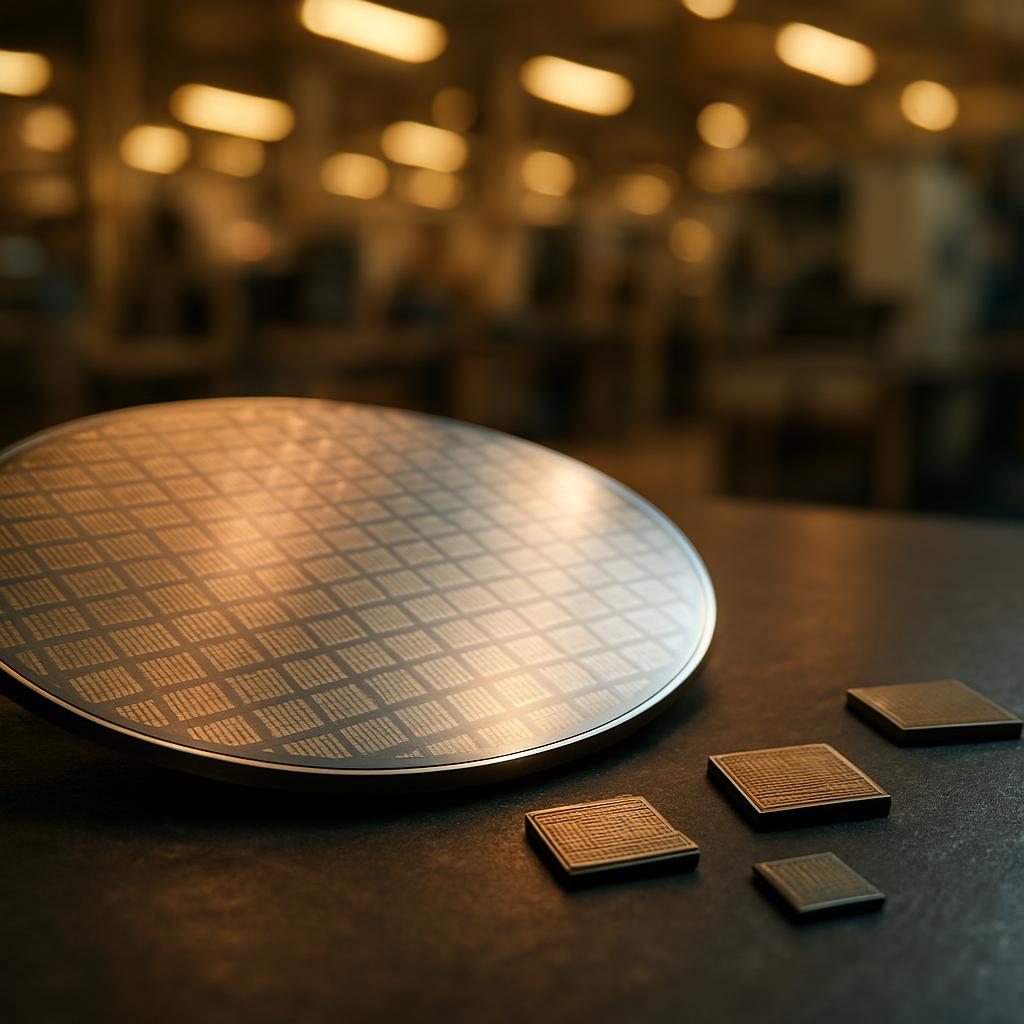
The semiconductor industry closed out 2025 on a historic high, with global chip sales climbing to roughly $772 billion, according to recent reporting. The surge, driven largely by demand tied to artificial intelligence, has reshaped both the industry's revenue outlook and the investment products built around it.
Key takeaways
- Global semiconductor sales reached a record of approximately $772 billion in 2025, up more than 22% from the prior year.
- Analysts attribute much of the surge to artificial intelligence demand, with specialized semiconductor investment products expanding alongside it.
- Researchers are reporting early-stage advances in chip design, including lower-voltage gate electrodes and printed electronics for health monitoring.
Record Sales Cap a Historic Year for Chipmakers
The global semiconductor market grew by more than 22% in 2025, reaching approximately $772 billion in total sales, marking the industry's highest annual figure on record. The jump reflects the scale of investment pouring into chip production worldwide, as demand for processors capable of handling AI workloads has outpaced previous growth cycles in computing hardware.
The figure caps years of volatility for an industry that has swung between shortages and gluts, shaped by pandemic-era supply chain disruptions, geopolitical tensions over chip manufacturing, and swings in consumer electronics demand. A detailed breakdown of which companies are capturing the largest share of this growth is covered in a look at the world's top chipmakers, as firms across logic, memory and foundry segments compete for a slice of the AI-driven expansion.
AI Boom Reshapes Chip Investment Market
Beyond manufacturing output, the AI boom is also reshaping how investors approach the sector. Semiconductor-focused exchange-traded funds have grown increasingly specialized in response to demand tied to artificial intelligence, with market watchers expecting the industry to keep climbing through the rest of 2026.
That outlook underscores how closely chip sector performance is now tied to the broader AI buildout, from data center processors to the specialized components needed to train and run large models. Partnerships between chipmakers and AI firms have become a regular feature of the industry's momentum; one recent example is LG Innotek's collaboration with Nvidia aimed at advancing physical AI technology, illustrating how component suppliers are positioning themselves around AI-driven demand rather than traditional consumer electronics cycles.
New Research Points to More Efficient, Versatile Chips
Alongside the market's commercial momentum, researchers continue to pursue incremental technical advances aimed at making chips more efficient. Recent work highlighted by chip-focused science outlets includes tunable gate electrodes designed to help semiconductors operate at lower voltages, a development that could reduce power consumption in future devices if the technique scales beyond laboratory settings.
Separately, researchers have explored printed electronics as a way to add sensing capabilities to everyday objects, including a project turning mattress protectors into fall-risk monitors for vulnerable patients. While still early-stage, such work reflects a broader trend of embedding low-cost, flexible electronics into healthcare and ambient monitoring applications, extending semiconductor technology well beyond traditional computing hardware.